
01 Ott Cassina Monty Shadow Exhibition
Monty Shadow
“Photographic Textures”
Monty Shadow cannot be described simply as a photographer. His work spans photography, publishing, communication, public relations, corporate culture, and branding, making him one of the most fascinating figures in the transformation of communication from the 1970s to the 2000s. The exhibition is not a traditional photographic retrospective, but a visual narrative of how Monty anticipated some of the practices that now form the foundation of contemporary communication: cross-branding, branded content, creative networking, the construction of imagery, and unusual collaborations between different worlds.
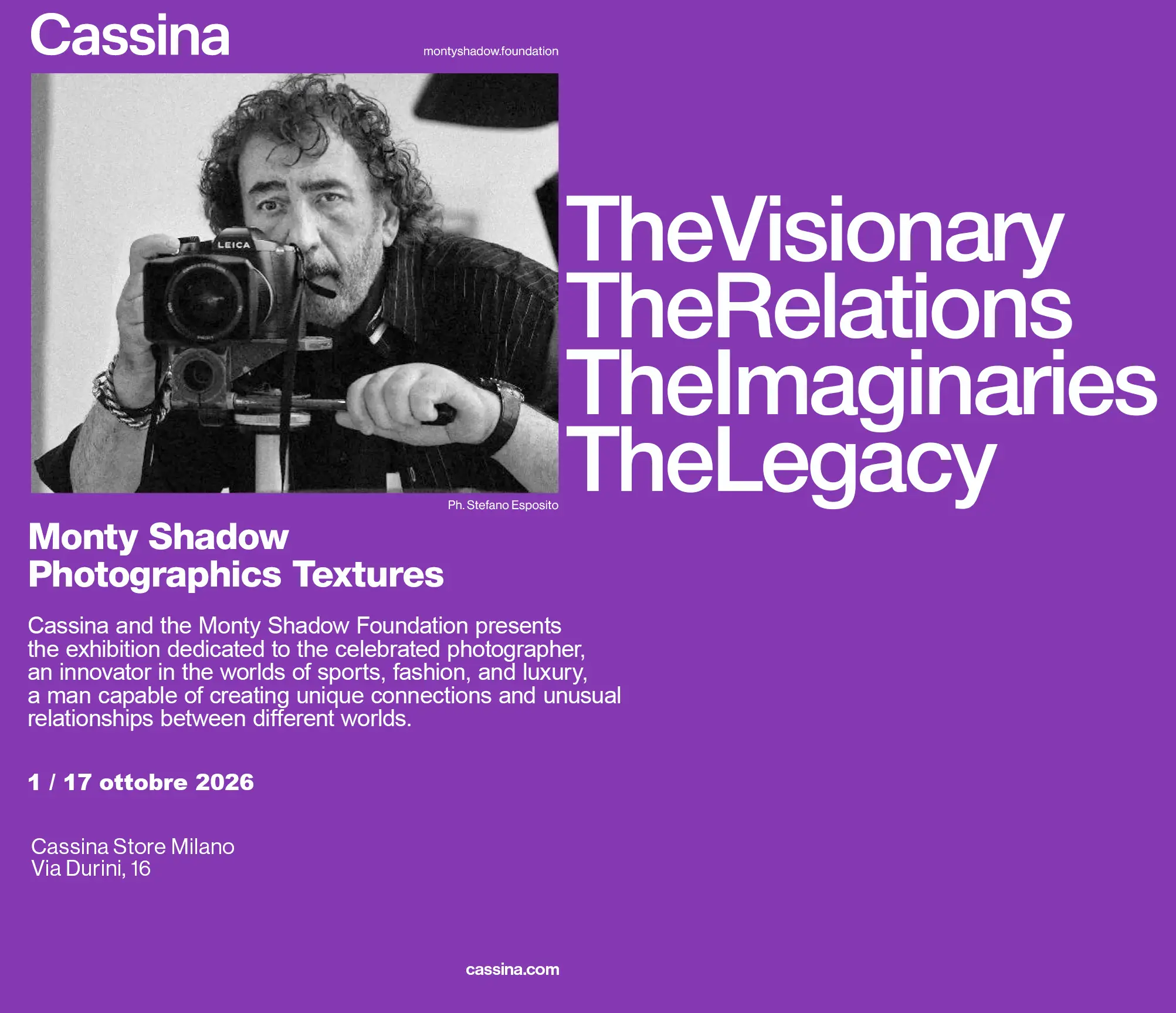
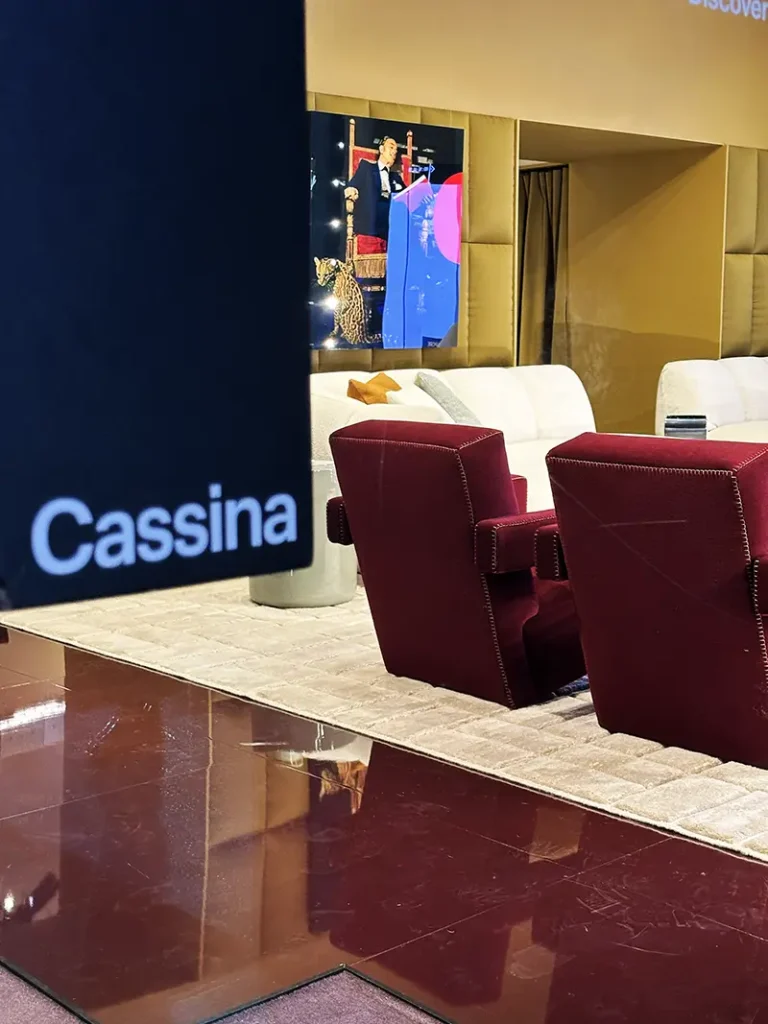
Through four main themes—The Visionary, Relationships, Imagery, and Legacy—the Cassina spaces are transformed into the visual and evocative setting of an ideal home, a place of dreams, where the pure design of the spaces enhances the images and vice versa, as if they had come together to express themselves in natural beauty. The spaces and photographs seem as though they have always been there together, enhancing the marvelous Cassina works of art that showcase—through the brand’s 100-year history—the essence of pure design.
The Visionary
Monty Shadow’s creative vision stems from the belief that art, communication, and business can coexist within a single cultural narrative. His collaboration with Salvador Dalí on the Scarab of Scabal publishing project, launched in 1971, demonstrated how Monty Shadow had intuited—decades ahead of his time—that brands could become promoters and, above all, producers of culture. In 1970, he photographed Salvador Dalí for the magazine “Scarab,” in which the Master envisioned the man of the year 2000. From this memorable encounter emerged his creative journey, in which he was able “to capture tropical light in images of rare beauty, to defy fractions of a second by forever freezing the most thrilling sporting events, and to portray the world’s most beautiful women with irresistible sensuality.”

Among his numerous accolades, he was particularly proud to recall two portfolios dedicated to him by the Museum of Modern Art in New York, which recognized his artistic talent. In London, in the late 1970s, he worked for Condé Nast Vogue, and as a leading fashion and advertising photographer, his professional success allowed him to meet influential figures who inspired him to cultivate the idea—decades ahead of its time—that luxury brands could be the most effective and modern tool for producing culture. Art, communication, and business became his creative terrain, leading him to bring this concept to life with the creation of the St. Moritz Art Masters Festival, which, from 2008 to 2018, transformed St. Moritz into the largest art museum “on the roof of the world”: over 100 million works of art exhibited in the small town of St. Moritz encapsulated his entire artistic and creative vision.
The Relations
Monty Shadow has been able to forge relationships and collaborations across different sectors, people, and companies—from fashion to sports, technology, luxury, and lifestyle—bringing them together as part of a single creative ecosystem. In the 1980s and 1990s, his extensive experience expanded into the world of cinema, where he built a network of relationships in which art, photography, culture, and quality became powerful elements of communication. Together with Jason Binn in the United States, he created 14 renowned magazines, including Ocean Drive, Hamptons, Gotham, and others. With the same sensibility and creativity, he worked as an art director for various magazines, books, and special editions, and conceived numerous projects and events such as Formula One Events, the Fitness Festival, the World Sports Awards, the Academy of Sport (which became the Laureus Awards), the World Music Awards, various golf tournaments, and ATP Tennis Tournament events.
He has collaborated with Daimler Chrysler, Mercedes, and Richemont on their events worldwide and has become one of the most prestigious image-makers, enjoying a reputation as an extraordinary international and global public relations professional, an expert in marketing and communication, and in business and operational strategies at an unimaginable level. His creative spirit is dedicated to the world of cinema and to photography and video productions, where he has collaborated on productions, feature films, and advertising campaigns, leaving his mark on them. Among his friends are sports champions such as Ayrton Senna, Gerhard Berger, Gilles Villeneuve, Prince Albert Ranieri of Monaco and Princess Caroline of Monaco, King Juan Carlos of Spain, Stallone, Robert De Niro, Arnold Schwarzenegger, Steven Seagal, Michael Douglas, Kevin Costner, Richard Gere, Sean Connery, Jessica Lange, Julia Roberts, Madonna, Sharon Stone, Kim Basinger, Sandra Bullock, Michelle Pfeiffer, Michael Jackson, George Michael, Elton John, Whitney Houston, Luciano Pavarotti, Eros Ramazzotti … and many other stars.
The Imaginaries
Photography as a Fundamental Role: Images have always been the most powerful means of communication, and the calendars from his long career as a photographer offer us a remarkable glimpse into the collective imagination that defined an era. The calendar was not merely a promotional tool but a popular and enduring medium of communication, a design object, a symbol of identity, and a reflection of a specific era (the 1980s, 1990s, and 2000s) with the same evocative power and impact that today only social media possess.
That was the period when the world of communication viewed the “calendar” as the evolutionary form of print advertising, transforming it into a cultural phenomenon. The calendar was seen as a status symbol and a marker of identity—a true medium of popular communication that allowed brands to reach everyone, much like social media does on the web today. It was a way to “enter” people’s homes with a constant, non-intrusive message, and the key factors behind its success were that calendars inspired dreams by conveying a lifestyle: sports, fashion, cars, and technology. These were full-fledged advertising campaigns with production costs comparable to those of a small-scale film production; yet, unlike the advertising pages in magazines and newspapers—which dominated communication at the time—they “entered” people’s homes with a constant, permanent, and non-intrusive message. This created a strong visual brand identity, and all companies used calendars as a way to maintain a constant presence in homes and stores. They were often colorful and iconic, featuring graphics typical of the aesthetic of those years (neon, geometric patterns, glamour photography), and at the same time, a trend emerged to turn them into collectibles, with many corporate calendars becoming sought-after items (in radio stations, cars, bars, and stores). Their aesthetic, which today is considered “vintage,” remains modern, fresh, and instantly recognizable: the cornerstone of a communication strategy that drove sales of traditional magazines. “From one field to another, through companies, people, and personalities, from the past to the future, Monty Shadow was the man who left his mark on time with his sparks of creativity to pursue the ‘cosmic’ light of creativity.” The calendars he created for so many companies from the 1980s through 2000 served as a permanent medium of communication.
Traveling 250 days a year between England, South Africa, and the United States, he arrived in Italy to create advertising campaigns for Fila, the sportswear brand that was at the time one of the most important brands in the world, with its world champions such as tennis player Björn Borg, etc.; he photographed Boris Becker for Puma, etc. Rolls-Royce, Ferrari, Mercedes, AMG – Mercedes, DaimlerChrysler, Richemont, Vendôme, Esso, Sun International, Royal Resorts, Ellesse, Fila, Polaroid, De Beers, Riva, Revox, Fila, Polaroid, Hasselblad, Contax, Nikon….
The Legacy
Monty Shadow’s personality and body of work remain relevant today and serve as a benchmark. His ability to anticipate change, build relationships, bridge different worlds, and foster dialogue and exchange to tell human and business stories represents a strategic asset. Many of the principles that guide contemporary communication today were already present in his professional approach. The value of ideas, the ability to look at things down to their very essence and transform them into unique projects—ones that seemed unimaginable and impossible to achieve. By bringing together talent and a broad, holistic vision, he demonstrated—even before the digital age—that “true intelligence” lies in our “eyes,” which need to nourish our creativity every day.
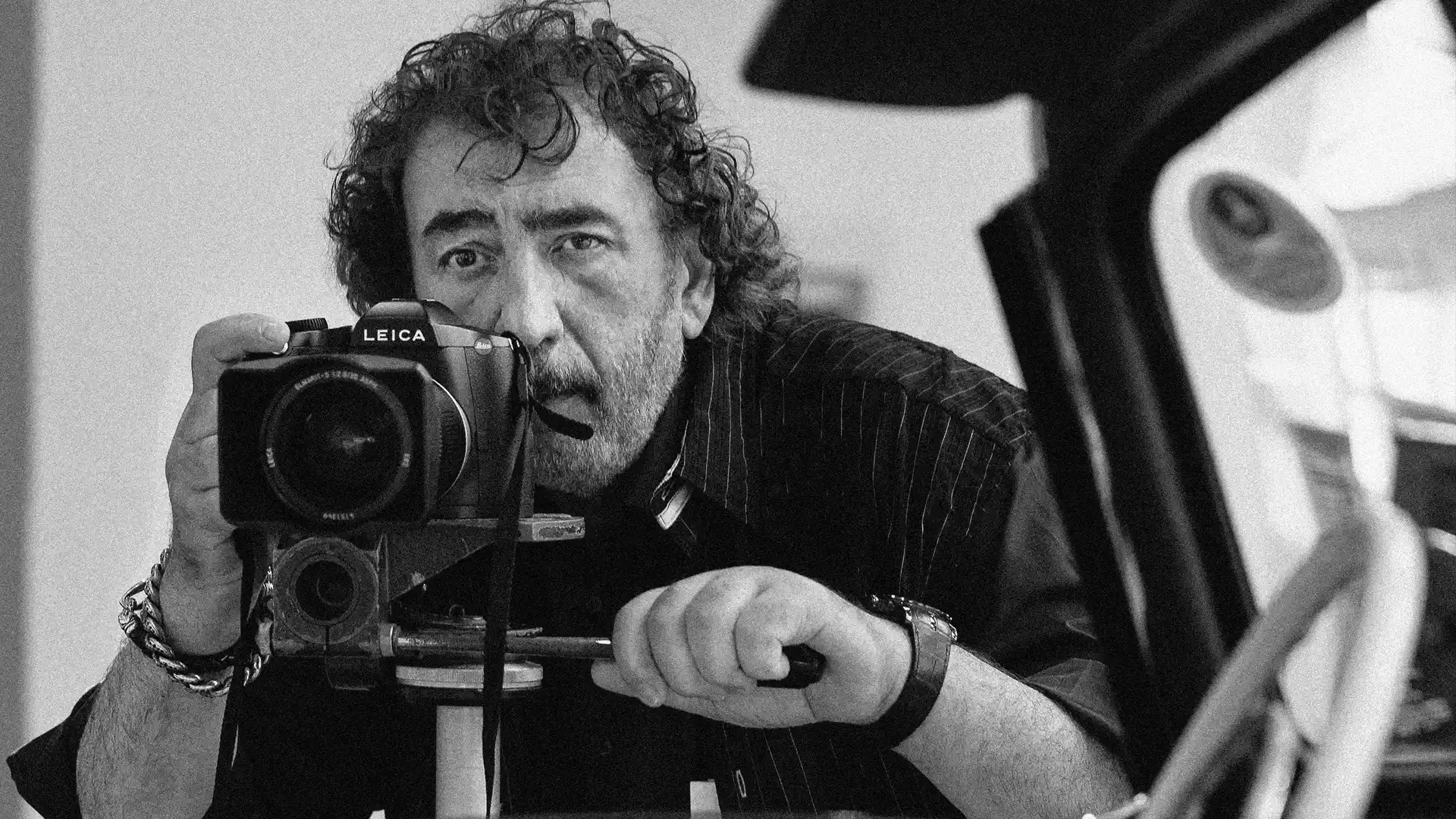
A voracious consumer of images, his eyes scanned hundreds of printed images every day, absorbing the creative value of those who had crafted those pages—a value that shone through his eyes in the admiration of someone who knew how to appreciate the creative composition at hand. A life dedicated to building bridges, revealing an ability to highlight the unique qualities of each individual while giving them an international and dynamic perspective. He anticipated trends in communication and guided great talents along their paths, which made him an eclectic and forward-thinking figure who was able to navigate between different worlds, leaving a profound mark. His ability to see the world through his own “eyes” speaks to how far ahead of his time he was and how adept he was at cultivating deep and lasting relationships with prominent figures. His versatility and ability to adapt to different contexts were the secret that guided his life and remain his greatest legacy today.